Lewis’s Moon Snail
Author and Photographer: Arden Barott
Scientific name: Niverita lewisii
Size range: ~76mm to 140mm (3 to 5.5 inches)
Identifying Features These moon snails are known to be the largest species in their family, Naticidae. An adult shell usually ranges from 3-5.5 inches in diameter. Females are typically larger, and have thinner shells than the males. They have a white or yellowish round spiral shell, which usually has a more shinier texture to their shell in comparison to similar species. They have a large foot, which has hollow sinuses that pump water into the foot to expand, making it suitable to plow through sand. The foot can stretch up to 12 inches when the snail is active. As well they have a radula, a proboscis, a calcium-carbonate operculum and two cephalic tentacles on their head.
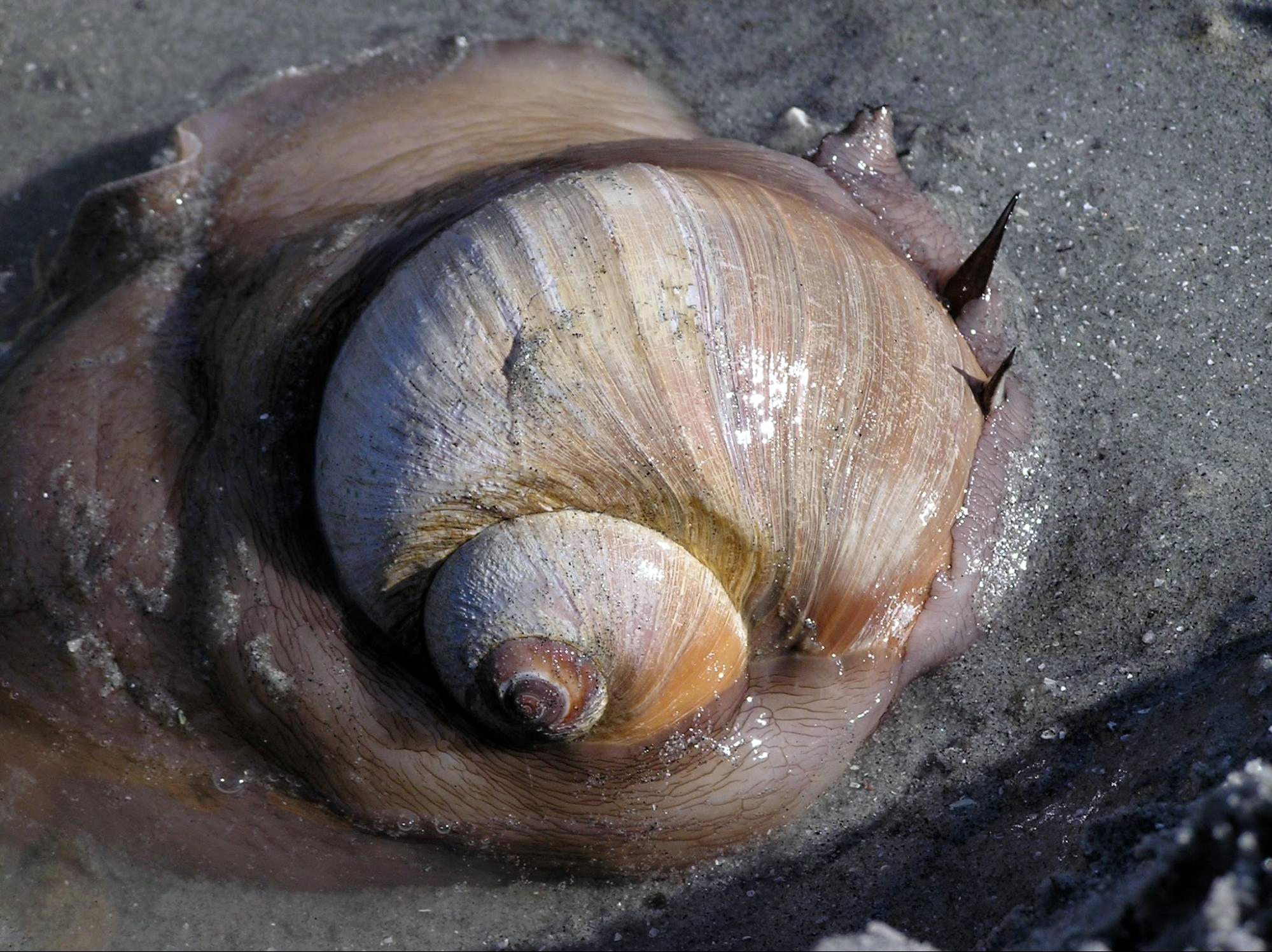
An adult Lewis’s Moon snail burying into sand on Cortes Island, BC.
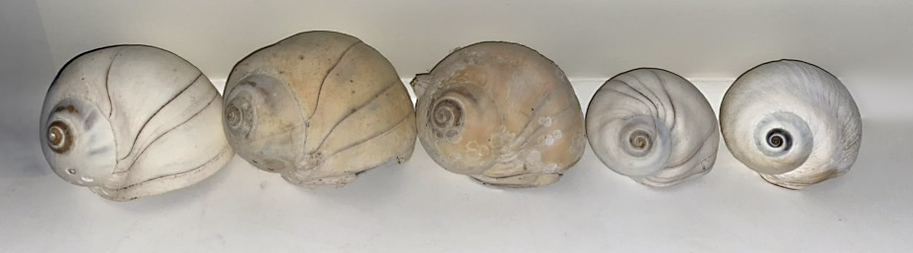
Lewis’s Moon Snail Shells
Habitat: This species primarily lives on the Pacific Coast, from Vancouver Island, Canada, to Isla San Geronimo, Mexico. They like to stay in shallow intertidal zones, on the seafloor close to the shoreline where there’s calmer waves and more food sources. In the winter they are found farther out, and come in during the summer for mating season.
Diet and Feeding: They eat primarily clams, and sometimes other shellfish or snails. They have a strong sense of smell, which they use to find clams buried in the sand. They then capture the clam in their foot, and use their radula to drill a small hole through the clam shell, secreting acid and enzymes to help dissolve the shell and liquify the flesh, then consuming the clam using their proboscis.
Predators: Lewis’s Moon Snails don’t have many predators due to the strength of their shells, however their main predator is the Sunflower Star, who are faster than the snail, and can extrude their stomach to suck the snail out and swallow it whole. Other potential predators include crabs, shorebirds, and other moon snails.
Life Cycle: A female moon snail will lay her eggs on the surface of the sand, typically between April – September. As she lays her eggs she mixes them with mucus and sand to form a solid ‘rubbery’ mass around her shell. These are known as ‘egg collars’. Each egg collar contains several thousand eggs. The eggs spend around a week in the collar, before hatching into larvae. The larvae then spend around 4-5 weeks living as plankton, feeding on algae, then settle down to the ocean floor and gradually begin their adult diet of shellfish. Juvenile Lewis’ moon snails tend to live subtidally, as their shells are rarely found on beach shores. These moon snails can live for up to 15 years.
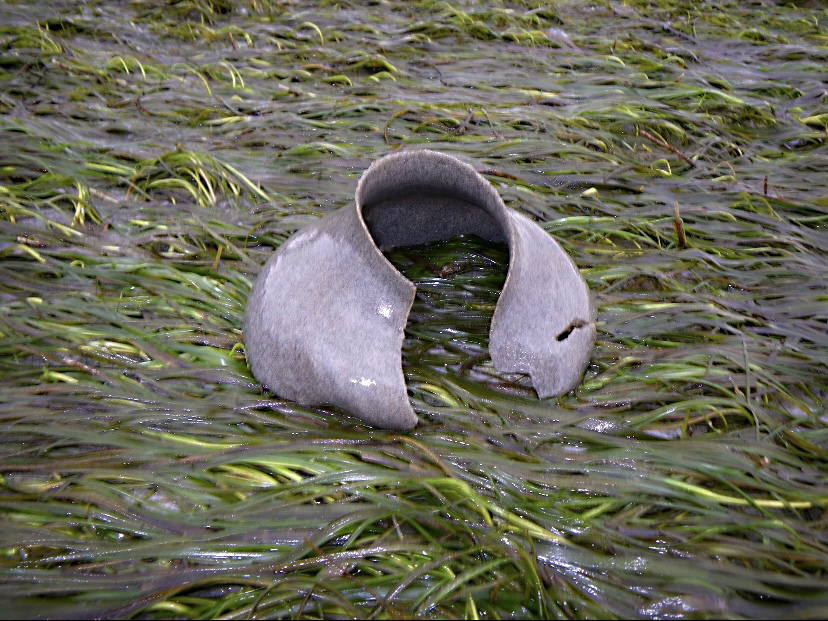
An egg collar found on the shore of Cortes Island, BC.
References
Gronau, C. (2017, March 14). The Biggest Moon of All – by Christian Gronau. Cortes Island Museum. https://cortesmuseum.com/blog/the-biggest-moon-of-all/
Lewis’ Moon Snail. (n.d.). Oregon Coast Aquarium. https://aquarium.org/animals/lewis-moon-snail/
Moon Snail. (n.d.). University of Puget Sound. https://www.pugetsound.edu/puget-sound-museum-natural-history/exhibits/marine-panel/moon-snail
Neverita lewisii – Wikipedia. (n.d.). Wikipedia, the free encyclopedia. Retrieved January 9, 2026, from https://en.wikipedia.org/wiki/Neverita_lewisii