
Grainy Hermit Crab
Author: Farren H.
Scientific Name: Pagurus granosimanus
Common Name: Grainy Hermit Crab, Grainyhand Hermit Crab
Size Range: Up to 4cm (1.6in)
Identifying Features:
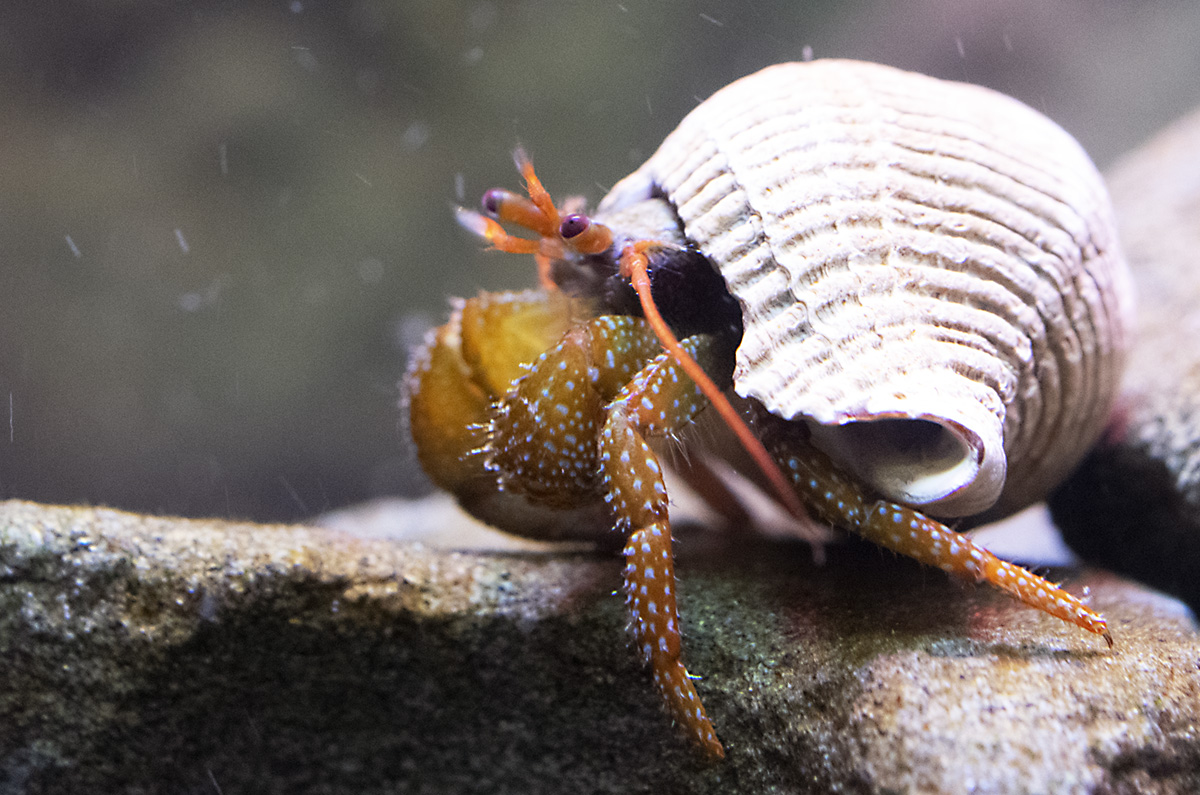
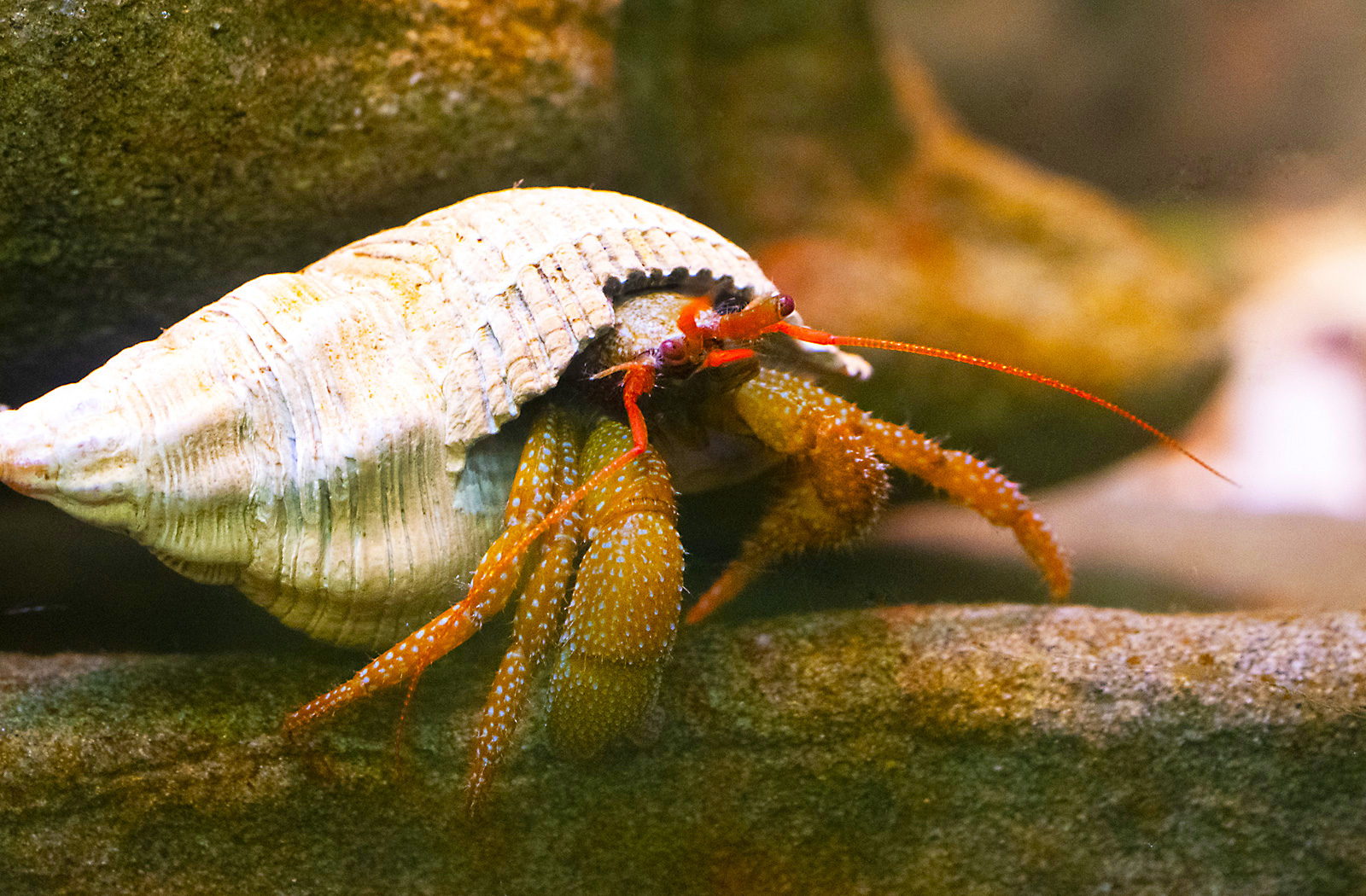
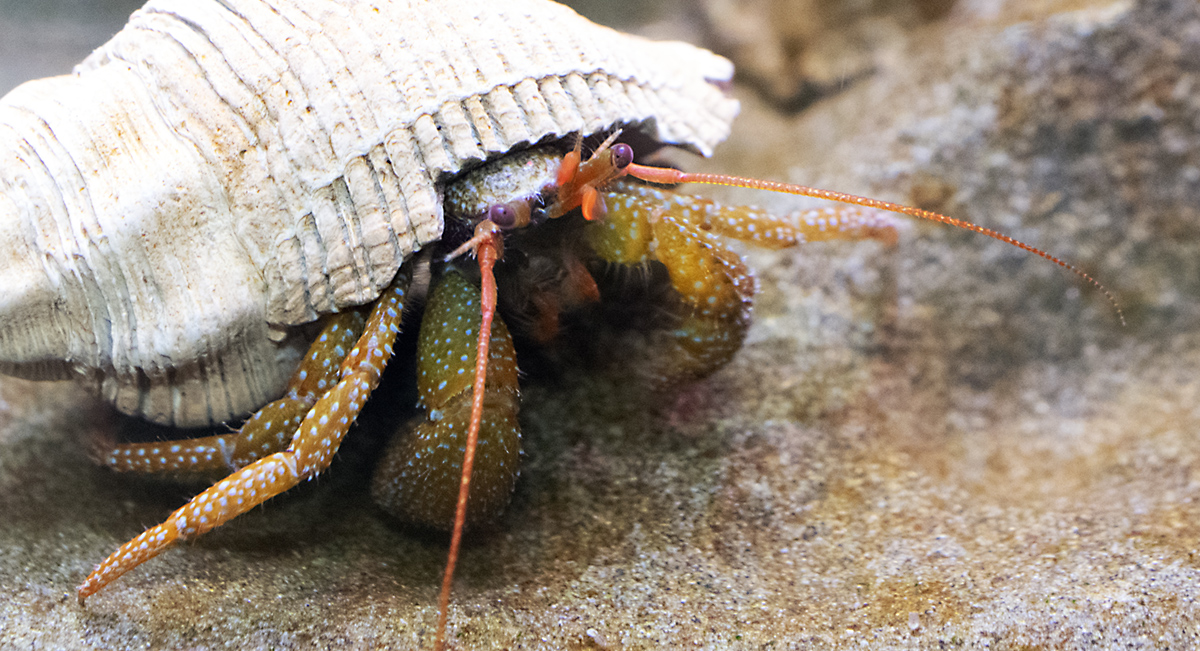
The most distinct feature of the Grainy Hermit Crab is that it has small blue bumps that create a rough texture, covering their legs and claws. Their claws are asymmetrical, with the right claw being larger than the left. They have eight walking legs and two claws, two pairs of walking legs, and the set of claws are on the outside of their shell, the other two pairs of legs remain inside the shell and are reduced in size. On the dactyls of legs two and three there is a blue band. Their body is an olive green colour, and their antennae are red or orange, and have no bands.
Habitat: The Grainy Hermit Crab lives in low intertidal zones ranging from the Aleutian Islands, to Bahia de Todos Santos. They can live in depths up to 36 m and do not tolerate brackish water. They can be found on sandy bottoms, shallow sand flats, under rocks, and on protected rocky beaches.
Prey: The Grainy Hermit Crabs, like all other hermit crabs, are omnivores, and will eat almost anything they can find. Their diet includes plankton, seaweed, algae, decaying leaves, bark, fruits, nuts, decaying creatures, and whatever particles of nutrition happen to float past them. They are scavengers, so they will eat scraps that other animals have left behind, but do not hunt for live prey.
Predators: Grainy Hermit Crab predators include sea stars, gulls, crows, larger crabs, and fish, such as gunnels, clingfish, pricklebacks, and snailfish.
Life cycle: Grainy Hermit Crabs will begin mating when they reach 2-3 years of age. Both the male and female crabs come partially out of their shells and the male transfers a spermatophore to the female, fertilizing thousands of eggs. The female hermit crab carries the eggs for about 55 days, when she releases the eggs from her shell, they hatch into the larval form called zoea. The zoea will pass through 4-5 stages before it metamorphoses into a megalop. Together the zoea and megalop stages last about 70 days, they then grow to become juveniles that find their first shells. The juveniles continue to become adults, changing shell size and molting as they grow, sometimes living past 40 years.
Photos by David Young
References
Cowles, D. (2005, July). Pagurus granosimanus. Invertebrates of of the Salish Sea. Retrieved January 9, 2026, from https://inverts.wallawalla.edu/Arthropoda/Crustacea/Malacostraca/Eumalacostraca/Eucarida/Decapoda/Anomura/Family_Paguridae/Pagurus_granosimanus.html
Grainy Hermit Crab. (n.d.). iNaturalist. Retrieved January 9, 2026, from https://www.inaturalist.org/guide_taxa/1000162
Hermit Crab Life Cycle. (n.d.). Hermit Crab Patch. Retrieved January 20, 2026, from https://www.hermitcrabpatch.com/Hermit-Crab-Life-Cycle-a/152.htm
Porter, M. (2026). Grainyhand Hermit Crab. Bugs With Mike. Retrieved January 9, 2026, from https://bugswithmike.com/guide/arthropoda/crustacea/malacostraca/eucarida/decapoda/anomura/paguroidea/paguridae/pagurus/grainosinanus