Clown Nudibranch
Author: Nora Mills
Video and photos by Isobel Austin and David Young
Common Names: Clown Nudibranch, Orange-spotted Nudibranch, Sea Clown, Sea Clown Triopha
Scientific Name: Triopha catalinae
Size Range: 7cm but up to 15cm in length
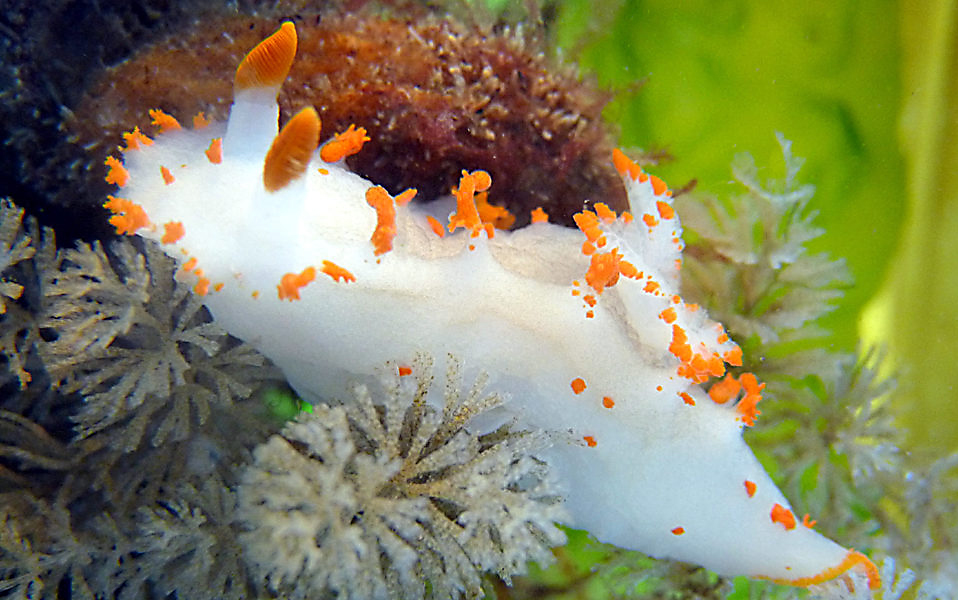
A Clown Nudibranch feeding on the Spiral Bryozoan (Bugula californica)
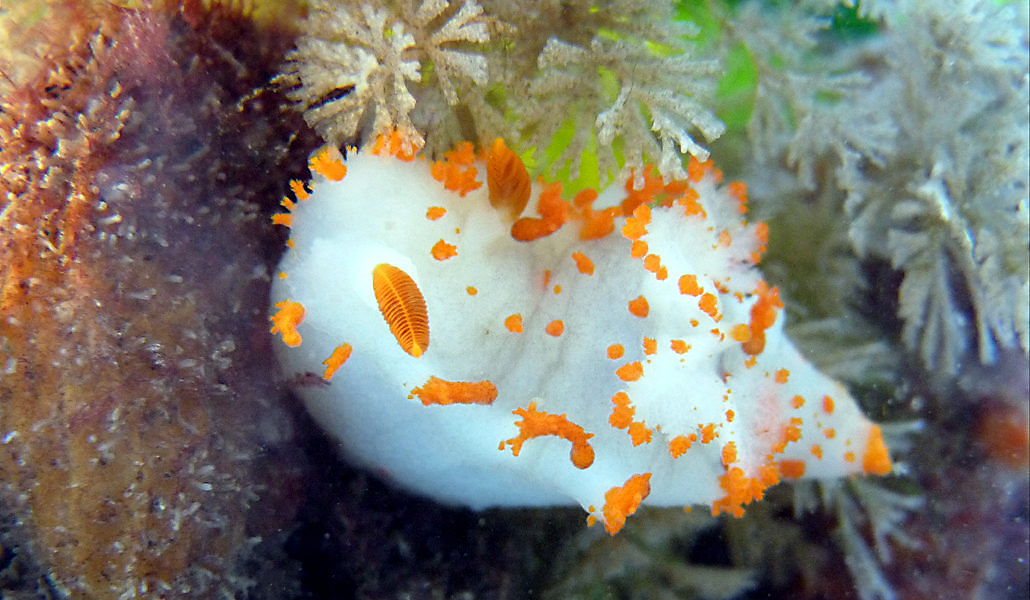
Identifying features: Clear identifying features of the clown nudibranchs are their white to grey opaque skin and bright orange bumps, resembling the colouration of a clown fish. The orange bumps are papillae and on their head are two rhinophores, used for smell that they use to find mates and food. The bright orange papillae contain chemical deterrents for protection against predators. They also function as a bright warning sign to predators with their neon colouring.
Habitat: Clown nudibranchs live around kelp beds or in protected rocky areas. The deepest they go is approximately 85m and they can be found in both the subtidal and intertidal zones. They inhabit the waters of the Aleutian islands, Alaska to the Gulf of California, Mexico, and the west coast of North America. There have also been sightings of clown nudibranchs off the coasts of Japan. Although they have bright colours warning off predators, clown nudibranchs still seek shelter under rocks, overhangs, and in rock crevices. They are benthic and are often found living in and around their food sources.

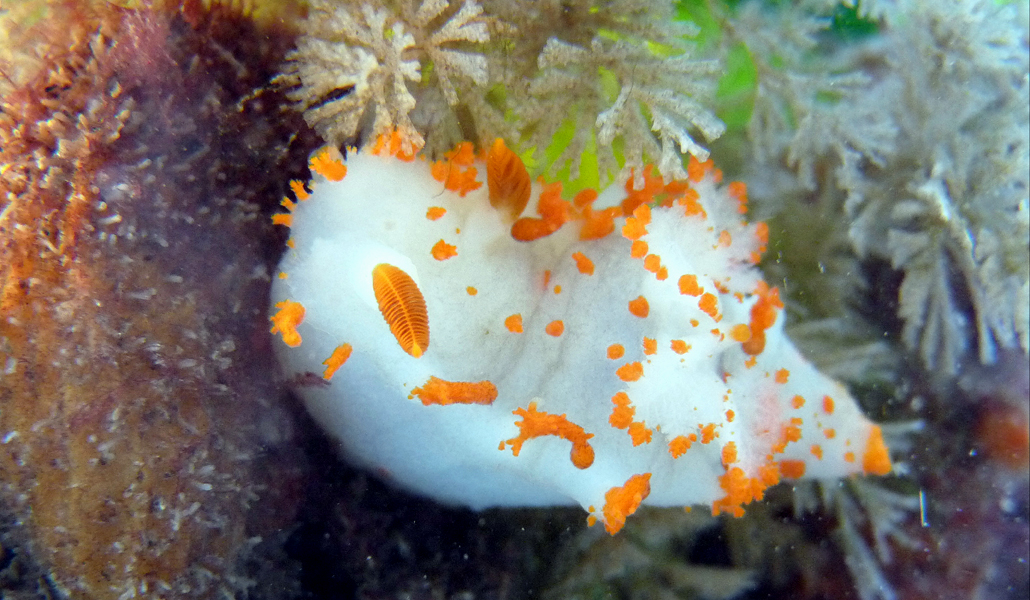
Food: The main food source for the clown nudibranch are bryozoans and sponges. Bryozoans are aquatic invertebrates that live in colonies. They filter microscopic food from the water while attached to hard substrates in shallow waters. Around Victoria, BC, the clown nudibranch often is found feeding on the Spiral Bryozoan (Bugula californica). The nudibranch is able to consume toxic sponges and sequester the toxins into their own tissues, making them harmful and distasteful to their predators. They use their rough, scraping radula to consume these organisms.
Predators: Animals known to eat clown nudibranchs include crabs, fish, sea stars, and rarely, other nudibranchs. They are easy to eat, being boneless and slow, but their toxic taste makes them unappealing.
Life cycle:
- White, gelatinous, spiral shaped eggs are laid on a hard surface like a rock.
- The eggs hatch and become planktonic larvae with a shell that is lost in metamorphosis.
- During metamorphosis, the larvae settle on the sea floor and become juvenile nudibranchs.
- As juveniles, they begin to feed on bryozoans and sponges as they grow into full size adults and live in the intertidal zone.
- Although they have full sets of male and female reproductive organs, they are simultaneous hermaphrodites and fertilize each other. They will die shortly after laying eggs.
References
Cowles, D., & Wheeling, R. (2007). Triopha catalinae (Cooper, 1863). Triopha catalinae. https://inverts.wallawalla.edu/Mollusca/Gastropoda/Opisthobranchia/Nudibranchia/Doridacea/Triopha_Catalinae.html
Critter Republic. (n.d.). clown nudibranch. marine species index. https://critterrepublic.com/clown-nudibranch/
Haystack Rock Awareness Program. (n.d.). Clown Nudibranch (Triopha catalinae). Clown Nudibranch. https://www.haystackrockawareness.com/clown-nudibranch
Miller, G. (2008, July 14). Triopha catalinae (Cooper, 1863). Sea Slug Forum. https://www.seaslugforum.net/showall/triocata
Sea Clown Triopha ( Intertidal Nudibranchs of the Monterey Bay Area, California) · iNaturalist. (n.d.). iNaturalist. Retrieved January 8, 2026, from https://www.inaturalist.org/guide_taxa/925848