
Daisy Brittle Star
Authors: Ruby and Ella
Scientific Name: Ophiopholis aculeata
Common Name: Daisy Brittle Star, Serpent Star, Crevice Brittle Star,
Size range: Diameter of around 5-12cm
Identifying features: The Daisy Brittle Star is usually a red or orange colour, with white spots on its disk. The disk and arms are covered in small dull spines. The arms are thin and spindly, and don’t touch each other at the disk. They can have 5-7 arms, and they can regenerate them slowly. The Daisy Brittle star is fast-moving, and when picked up will stiffen its body and arms, which can cause them to snap off.
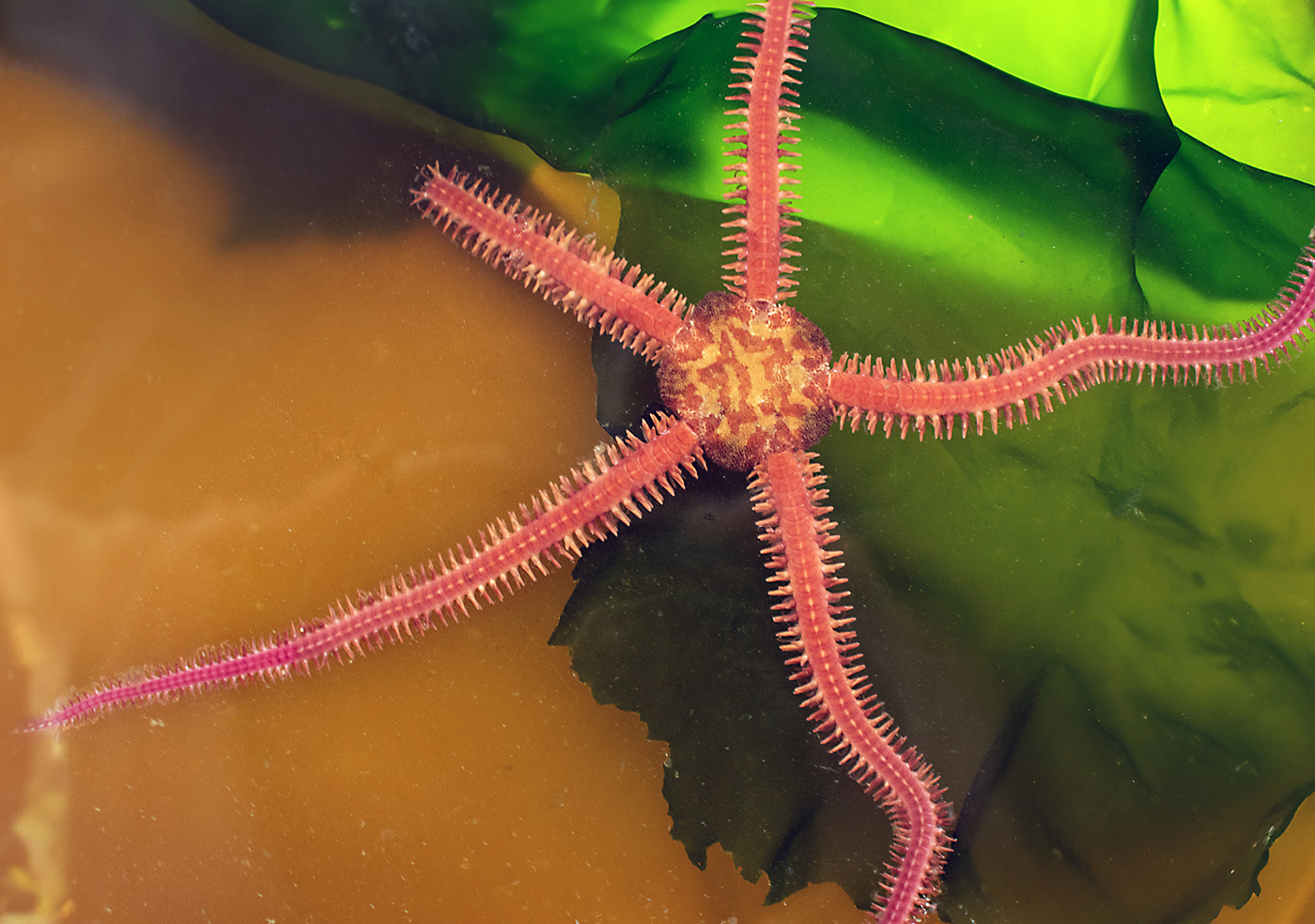
A Daisy Brittle Star, Ophiopholis aculeata (photo by Ruby and Ella)
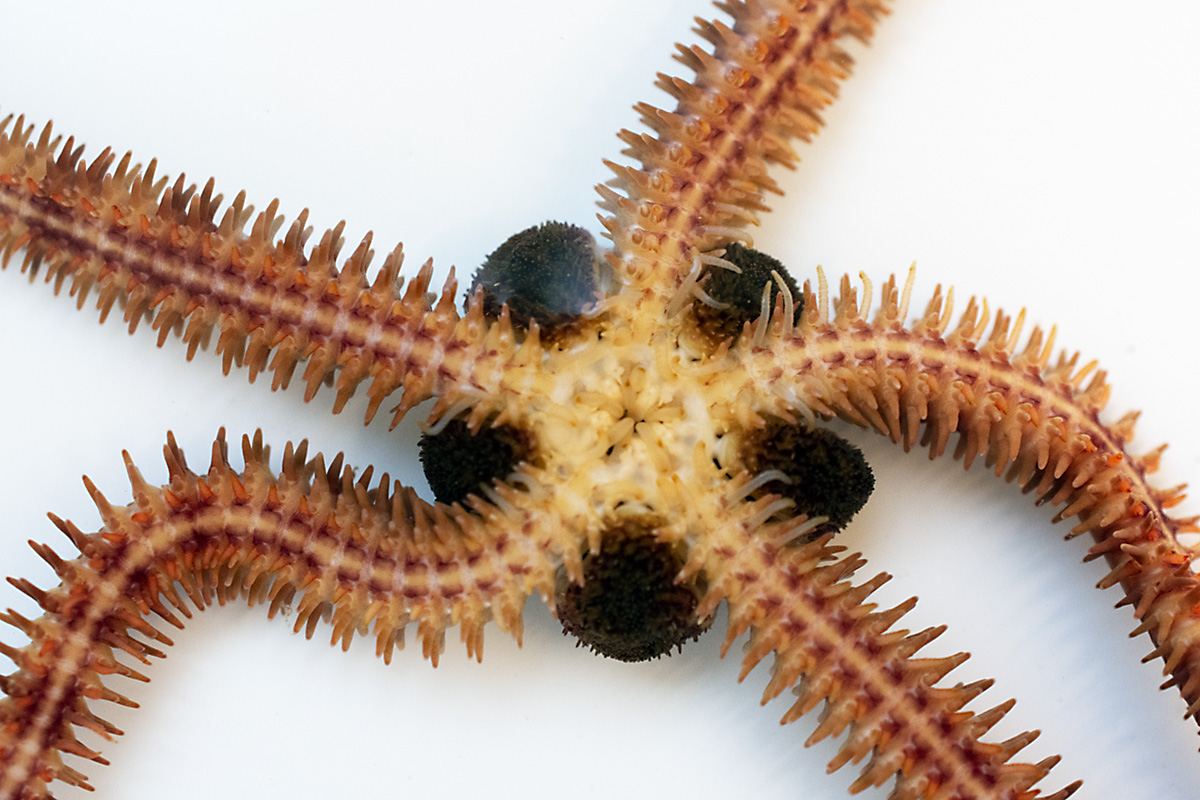
The ventral side of a Daisy Brittle Star showing its mouth (photo by Ruby and Ella)
Habitat: This sea star typically prefers to live under rocks in tide pools. They are primarily found in reef and coastal ecosystems for example in the north Pacific coast. They love to burrow in the sand and hangout in kelp holdfasts. They live in waters up to 5000ft (2000meters) deep.
Food: These echinoderms eat microscopic organisms, decaying matter on the sea floor, and sometimes little crustaceans and polychaete worms. They have a main diet of plankton, algae, and diatoms. They catch their prey with the tube-feet on the underside of their arms to bring it to their mouth.
Predators: The Daisy Brittle Star’s main predators include crabs, fish, Harlequin ducks, sea urchins, and even other sea stars. To defend itself, the Daisy Brittle Star will break off parts of its own arms to escape from predators.
Life cycle: The Daisy Brittle Star can reproduce asexually and sexually. For asexual reproduction, a piece of the star containing part of the disk breaks off to become a new star. Their mating season is the end of summer and they have a life span of around 5 years. They have separate sexes and their fertilization is external. The planktonic larva stage is called ophiopluteus larvae. Following their planktonic stage they glow larger and settle on the ocean floor where they undergo metamorphosis and become juveniles.
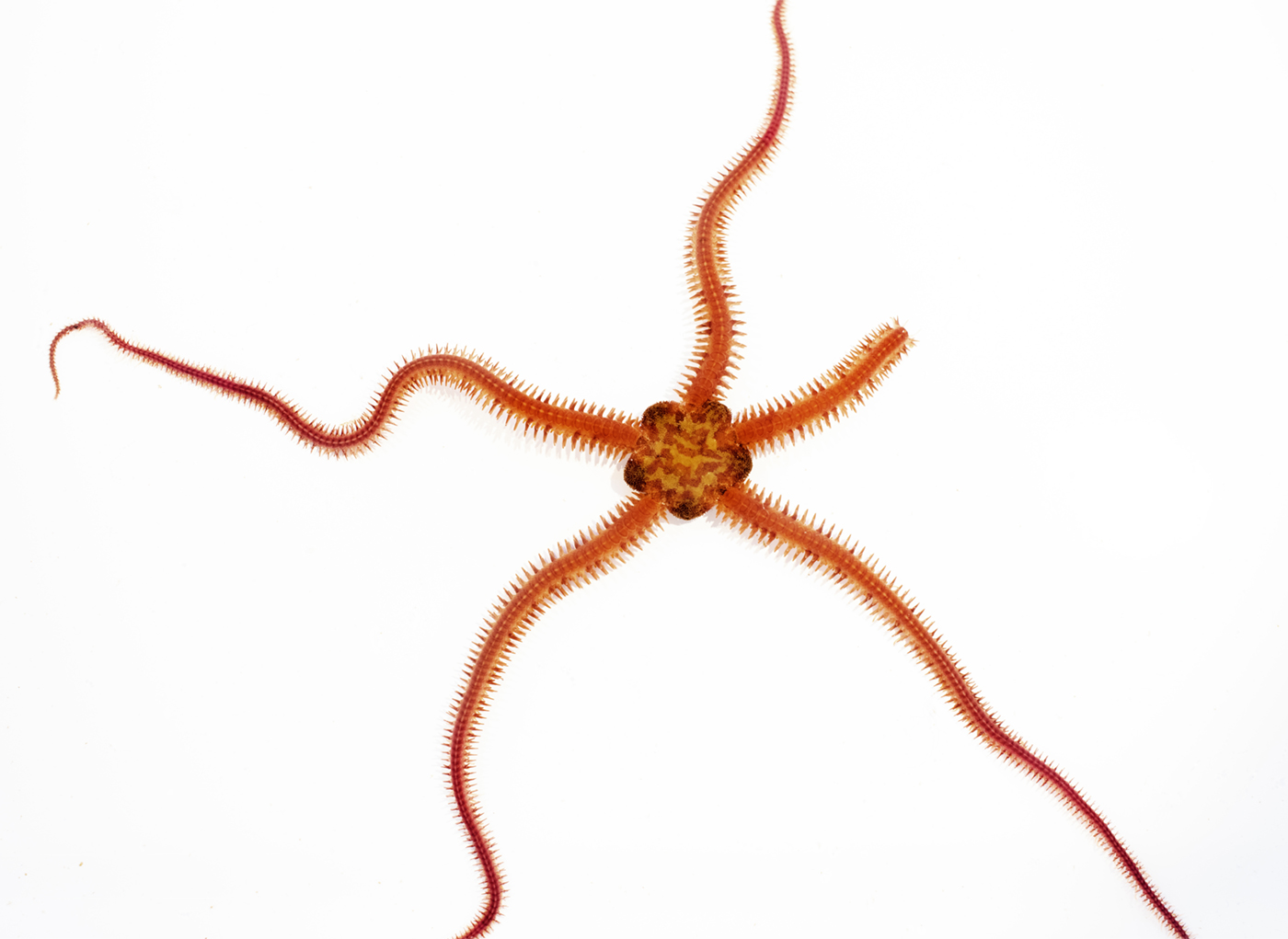
Photo by D. Young
Photo by Ruby and Ella
References
Cowles, D. (2006). Ophiopholis aculeata. Invertebrates of the Salish Sea. Walla Walla University. https://inverts.wallawalla.edu/Echinodermata/Class%20Ophiuroidea/Ophiopholis_aculeata.html
(n.d.). Espace pour la vie. Retrieved August 2, 2026, from https://espacepourlavie.ca/
Sea Wonder: Brittle Star. (n.d.). National Marine Sanctuary Foundation. Retrieved August 2, 2026, from https://marinesanctuary.org/blog/sea-wonder-brittle-star/